

Two Cities, Chapter 2: Not Another Word
Two Cities · chapter 2
Names and places are fictional.
The night before, in Toronto, Léa had sent Sam a link and let him take control until midnight. In the morning an email from him was waiting: “Tomorrow night, I’m sending you a link.” (It starts in chapter 1.)
She read it at 7:10 on the bare mattress, one sock on, hair in her mouth. An email, not a text, as if he had wanted it in writing. She read it again and understood: this time the link would be his, and the slider would be hers.
She wrote back one word, “Yes,” and then, because she couldn’t help it: “Since when do you have something to send?”
“Since two weeks before you left. It’s being delivered to the office today. Don’t ask.”
She laughed out loud and pressed the phone against her mouth.
When the elevator opened on the ninth floor, a woman was already inside, holding the door with one hand: about fifty, a grey streak in her black hair with reading glasses pushed up into it, a canvas bag of oranges on her hip. She looked at Léa the way you look at someone you already know a little.
“9C,” the woman said. Not a question. “I’m next door. 9B.”
“Oh. Hi. I’m Léa.” She held out her hand. “The mailbox says Chen?”
“My husband’s name. He’s in Vancouver more than he’s here.” A dry, warm hand. “Noor.” The elevator shuddered between the sixth and fifth floors, the way Léa would learn it always did. “The building is from 1962,” Noor said, watching the numbers. “Lovely bones. Thin walls. You hear the radiators, the streetcar. Everything.” The smallest pause on the last word. “Did you sleep well?”
Léa felt the colour climb from her collar to her hairline in the time it took the doors to open. “Very well,” she said.
“Good,” said Noor, and walked out into the lobby with her oranges and didn’t look back, and Léa understood that she hadn’t needed to.
In Montreal, the parcel reached the office at 2:15, in a box so plain the receptionist didn’t even look up. Sam put it on the passenger seat and drove home feeling as if the whole city knew.
He didn’t open it in the car, or in the kitchen. He opened it at the bathroom sink, with the door locked although he lived alone now, and stood there looking at it in its grey foam: heavier than he’d imagined, a little absurd, a little intimidating. He laughed at himself in the mirror. Then he plugged it in to charge and went to stand under the shower for a long time.
By 9:30 p.m. he was ready. Showered, lights low, phone on the pillow. He had paired it three times to be sure.
He’d also changed the sheets, which made no sense, since she would never see them. The blue ones, the ones she’d chosen. Her pillowcase he had decided not to wash: it still smelled faintly of her shampoo. He lay down naked on top of the covers, the bedside lamp turned toward the wall, and felt the air of the room on his still-damp skin, on his chest, his stomach, the inside of his thighs. The toy lay beside him on the mattress, warm from charging, like something waiting its turn.
“Got it?” Léa wrote.
“Got it.”
“Good. Send me the link. And after that, not another word.”
He did as he was told. Nothing happened for a long minute. Then a pulse, slow, like a heartbeat. Another. He understood she was counting, over there in her empty room, and that she had decided to take all the time in the world.
The pulse went through the toy into his whole body, low and patient, and every time it stopped he heard himself breathe out, too loudly, in the silent apartment. He put a hand flat on his own stomach, the way she did when she wanted him to slow down. It didn’t help at all. It only made him think of her hand.
She never went up when he expected it. She stopped dead, left him hanging, then started again lower, almost nothing. He reached for the phone to type “please,” and remembered the rule. Not another word.
In Toronto, Léa sat on the floor with her back against the mattress, knees up, the lamp off, the phone in one hand. She had promised herself she would only drive: calm, a little cruel, the way he had been the night before. It lasted twenty minutes. Then the slider under her thumb started to feel like something that was happening to her too. Every time she held it still, she heard in her head the breath he wasn’t allowed to send, and the skin under her T-shirt tightened as if he had breathed on it.
She pulled the T-shirt over her head and threw it onto the unopened boxes. The floor was cold under her; the radiator ticked. Her free hand slid down her stomach, under the elastic of her underwear, and settled without asking her into the speed she was setting for him. When she slowed him down, her hand slowed down too. When she pushed the slider up a notch, her own hand followed it, and her hips lifted off the floorboards, and she had to put her head back against the mattress and breathe through her mouth.
She pressed record to tease him. She forgot to let go.
It was only at the end, when the sound was already rising in her throat, that she remembered the mattress was pushed against the wall, and what was on the other side of it. Everything. She bit her lip a second too late. Behind the wall, very close, a cupboard clicked shut, softly, and then there was nothing at all: the careful nothing of someone standing still.
At 9:52 the voice note reached Montreal. Nine seconds. Sam pressed play and held the phone against his ear. No words: only her breathing, very close to the microphone, uneven, and at the very end a small sound in her throat, as if she had bitten her lip and it hadn’t worked. He played it again. She must have known exactly what it would do to him, because at that moment the vibration climbed, one notch, then two, and he pressed his heel into the mattress and his mouth into her pillow so he wouldn’t answer.
He couldn’t see her. He didn’t need to. He was sure, without knowing why, that her T-shirt was off, that she was on the floor and not on the bed, that one of her hands was on the phone and the other was keeping exactly his time. The sheet under his back was damp. His whole body had gone tight, like a held note. He said her name out loud, to nobody, and decided it didn’t count as a word, since she couldn’t hear it.
At 10:13 the pulses came closer together, like footsteps running up a staircase.
At 10:14 the vibration rose all at once, and didn’t come back down.
His hand closed on the blue sheet.
For a long while afterwards he didn’t move. The link had ended on its own; the toy had gone quiet against him. His heart was beating in his ears, in his wrists. The sheet was twisted under him, her pillow had slid to the floor, and there were four small red crescents in his palm where his own nails had dug in. He laughed, alone, at the ceiling, the way she had laughed in her empty room the night before, and understood that laugh now.
Then he broke the rule and typed a single word: “Léa.”
Three dots in Toronto. Gone. Back. “I know,” she wrote. “I could tell the second you stopped breathing. I stopped too.” And then: “Don’t answer. Go drink a glass of water.”
He drank the glass of water standing in the dark kitchen, naked, his legs not entirely his. Then he called her. Voice only. She answered on the first ring, in a whisper.
“Why are you whispering?”
“I have a neighbour.”
“Since when?”
“Since this morning.” He heard her shift on the floor, the rustle of the T-shirt she was pulling back on, her breath still not quite settled. “Sam. I ordered the one that goes with yours. The one that answers it. Apparently the two of them can answer each other.” A pause. “Saturday after next. Both of us at once. Nobody leads.”
“Nobody leads,” he repeated, and she laughed under her breath, and somewhere behind her, very faintly, he thought he heard a radiator, or a door.
On Friday morning there was something in her mailbox besides the hydro bill: a square of heavy cream paper, folded once, no envelope. The handwriting was small and upright, in real ink.
Thursdays you’re louder. Don’t stop on my account. — N., 9B
Léa stood by the mailboxes with the paper in her hand and her face hot. She had lived in the building for two nights. A Wednesday and a Thursday. Someone on the other side of her bedroom wall had been comparing them.
She didn’t tell Sam. She folded the note in four and put it in her coat pocket, and all day at work, every time her hand went into that pocket, she touched it.
To be continued… Chapter 3: the two toys answer each other. Next Sunday.
The toy in this chapter
Overview based on manufacturer info, not a hands-on test · partner links
Sam uses a Lovense Max 2, a toy for him that the other person controls from the Lovense Remote app. It also syncs with Nora: the more one moves, the more the other vibrates.
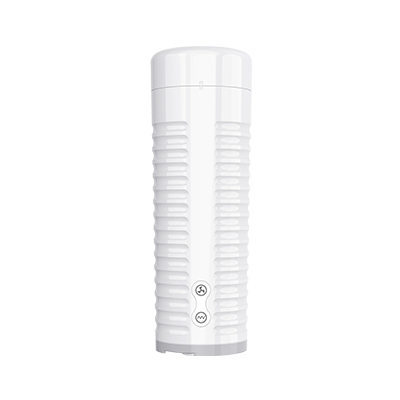
Max 2
For: Him · solo, couples, long distance
Control: Lovense Remote app; Toy Sync: controls other Lovense toys, syncs with Nora at any distance
- Pro: 360° vibrations and contractions
- Pro: Textured sleeve
- Pro: Battery: 95 to 215 min
- Con: Weight: 750 g
- Con: IPX6 water-resistant
Price: see lovense.com (it changes often)
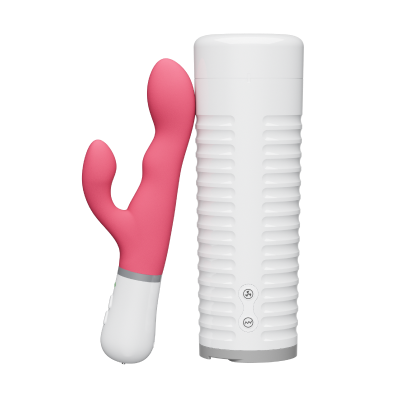
Nora + Max 2
For: Couples, including long distance
Control: Lovense Remote app; sync: the faster you thrust with Max 2, the stronger Nora vibrates, and vice versa
- Pro: The two toys respond to each other, even at a distance
- Pro: Each one also works on its own
- Con: Max 2 weighs 750 g
- Con: Both IPX6: water-resistant, not waterproof
Set price: see lovense.com (it changes often, so we don’t list it here)
Try it tonight
- Whoever has the toy sends a control link.
- One rule: not another word until the end. Only the vibration speaks.
- Afterwards, call each other. Tell each other what you imagined.
Go further: our Max 2 review, our Nora review and the best long-distance toys for couples.
Names and places are fictional.